It began as curiosity.
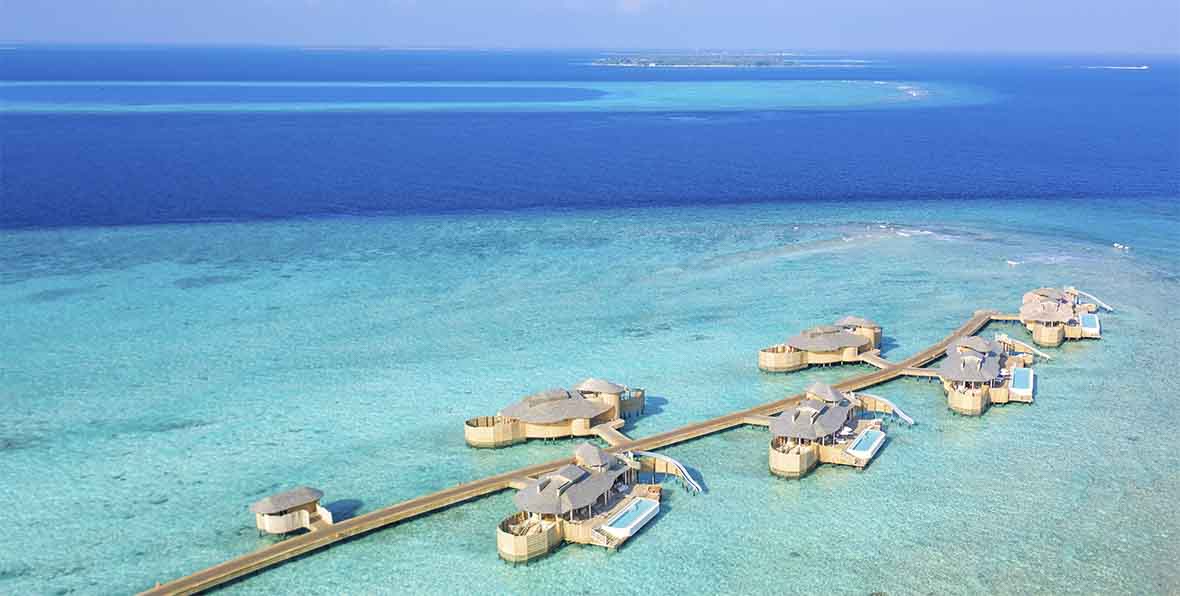
A few of us—friends who love travel, design, and occasionally run wild ideas past one another—started wondering if one could ever own a piece of the Maldives. Not a timeshare. Not a rental week. A real villa on one of those powder-white islands we’ve all stayed at, stared at, or scrolled through.
That trail led me deep into the fine print of Soneva Villa Ownership, the program that allows private individuals to buy long-term rights to villas at Soneva’s eco-luxury resorts. What started as dinner-table curiosity became a few weeks of spreadsheets, calls, and legal reading.
These are my notes—for anyone else who’s ever day-dreamed of making the Maldives more than a pin on their map.

The Allure
Soneva’s brand story is beautiful. The barefoot luxury, the sustainability ethos, the idea of living inside a postcard. They operate three flagship resorts:
- Soneva Fushi (Baa Atoll, Maldives)
- Soneva Jani (Noonu Atoll, Maldives)
- Soneva Kiri (Koh Kood, Thailand)
Each offers a small number of villas that individuals can purchase. The moment you land on their brochure, it feels deceptively simple: “Own your slice of paradise.”
But once you start unwrapping the legal, financial, and operational structure, the picture changes quickly from turquoise to technical.
What You Actually Own
In the Maldives, foreigners can’t own freehold land. Every resort island runs on a head lease from the Maldivian government. Soneva, as the lessee, sub-leases individual villas to owners for the remaining lease term (around 25 years at present). If Soneva renews its head lease, you pay your share to extend yours.
At Soneva Kiri in Thailand, it’s similar—foreign buyers hold long-term leaseholds or structured ownership through Thai companies. Either way, you’re buying time, not land.
It’s still genuine ownership of a villa—but leasehold ownership.
How the Money Flows (And What I Learned)
Here’s where my research got interesting.
If you place your villa in Soneva’s rental pool, this is roughly how it works:
- The resort earns room revenue from guests.
- 10% is taken for rental-related costs (housekeeping, marketing, etc.).
- The remaining 90% is split 50:50 between you and Soneva.
- From your share, Soneva deducts another 2% of purchase price per year (1.5% operating, 0.5% reserve).
So, if a villa earns $1 million in gross revenue:
- You receive ~$430,000 per year before tax and currency impact.
But that number moves with seasonality, usage, and occupancy. When I modelled it conservatively across multiple case scenarios, I found yields generally landed between 4–7% annually, assuming good seasons and limited personal use.
The Price of Paradise
- Soneva Fushi: USD 3–12 million
- Soneva Jani: USD 5–25 million
- Soneva Kiri: USD 2–10 million
Even the smallest villas hover around ₹25–30 crore.
For Indians, the Liberalised Remittance Scheme (LRS) cap of USD 250,000 per individual per year means the structure must involve multiple family members or an offshore entity compliant under FEMA. Not impossible, but tedious.
When I first saw the numbers, it felt like the kind of commitment one makes when buying an aircraft share, not a vacation home.






Running the Math: Two Realistic Indian Scenarios
1. The Lifestyle Buyer
A friend in our group would fall in this category—uses the villa 60 nights a year.
- Gross revenue: USD 600 k
- Net to owner after all deductions: ~USD 250 k
- Yield: 4.1% on USD 6 m
2. The Yield-First Investor
Another friend wanted minimal use, maximum rent.
- Gross revenue: USD 900 k
- Net to owner: ~USD 430 k
- Yield: 7.1% on USD 6 m
Once you account for tax, lease amortisation, and illiquidity, both compress further. Still respectable, but not game-changing.
Liquidity (Or the Lack of It)
Resale liquidity is limited. Villas rarely trade hands fast, and buyers must accept Soneva’s management agreement. There’s usually a first-right-of-refusal clause, and marketing a resale can take a year or more.
One broker candidly told me: “These sell more like art than apartments.” He wasn’t wrong.
The Fine Print We Found Most Important
- Lease renewal: Tied to Soneva’s head lease—confirm dates and extension cost formulas.
- Operator dependency: Rental returns rely entirely on Soneva’s pricing, brand strength, and occupancy management.
- Currency exposure: You earn in USD but may repatriate to INR; swings matter.
- Maintenance deductions: The 2% yearly charge is meaningful; treat it as part of your return math.
- Force majeure: Storms, floods, or pandemics—clarify insurance and reserve coverage.
The Emotional ROI
Numbers aside, walking through a Soneva villa is a masterclass in design and calm.
It’s the kind of space that makes you slow down, think clearer, and believe you’ve somehow hacked adulthood. You’re not just buying a structure—you’re buying belonging in a micro-universe that’s built around mindfulness, barefoot dinners, and stars above a private deck.
For those who already travel to these resorts often, the emotional ROI may well justify the financial one.
Global Context
Savills’ 2024 report on branded residences found that these assets trade at a 30% premium to equivalent non-branded homes, with yields typically 3–6%.
Soneva, Aman, and Six Senses sit at the very top—where the lifestyle narrative eclipses pure yield. The buyers are rarely speculators; they’re collectors.
Our Collective Verdict
After many discussions and a few polite arguments, our small group agreed on this:
Soneva Villa Ownership is a lifestyle decision disguised as an investment, not the other way around.
It makes sense if:
- You’re globally diversified.
- You visit the Maldives multiple times a year.
- You treat rental yield as a pleasant offset, not an ROI target.
Otherwise, that same capital could compound more predictably elsewhere—and you could still book the villa anytime you want, minus the maintenance headaches.
The Checklist We Built (and You Can Steal)
Legal & Structural
- Confirm head-lease expiry and extension clause.
- Obtain independent legal opinion (Maldives/Thailand).
- Verify compliance under LRS & FEMA.
Financial
- Request five years of audited resort KPIs.
- Model returns using both heavy-use and low-use cases.
- Clarify all deductions and reserve percentages.
- Review withholding-tax implications in Maldives + Indian taxation.
Operational
- Review management & rental agreements end to end.
- Understand owner-use blackouts and termination clauses.
- Confirm insurance and disaster-recovery policies.
- Ask for any past resale data.
The Closing Thought
Luxury real estate has two kinds of owners—those who chase returns and those who chase meaning.
Soneva speaks to the latter.
When I ran these numbers, I realised something subtle: the value of these villas isn’t just in yield, but in how they make you feel when you’re there—and what that says about your life when you’re not.
Still, for anyone exploring such investments, romance should never replace research.
So here’s mine, distilled and shared—for everyone else who has ever stood on an overwater deck and thought, “What if this could be home?”